
Searching Criminal Dockets in Arizona
Pull out the citation, hearing notice, or other court paper first. It names the court and usually carries the case number. Arizona's free Public Access lookup can locate case information from participating courts. For eligible Superior Court criminal matters, eAccess offers a separate search. It covers case details and document images. Neither service covers every court or record type. Know the county, the court level, and the exact number. An Arizona criminal docket search works best with those three pieces in hand.
When an online search comes back empty, check with the court named on the paper. Don't conclude anything yet. Justice and Municipal Court files sit with their own clerks in Arizona. Superior Court cases belong to the county Clerk of the Superior Court. Depending on the court, you may use a local search page or public terminal. You can also visit the records counter, call the clerk, or send a written request by mail or another accepted channel.
- Read the Arizona notice or citation and write down the court, county, case number, and filing date.
- Search Arizona Public Access by the party or business name, or by case number. Complete the CAPTCHA and confirm the court shown in any result.
- For a qualifying Arizona Superior Court case, check eAccess for covered case information and document images.
- For a lower-court matter or a missing file, use the County Directory to reach the county’s Justice, Municipal, or Superior Court route in Arizona.
- Ask the Arizona court clerk for the official docket or a certified copy. Give the case number, date range, and exact document, then confirm the fee and delivery method.
Arizona Criminal Search Coverage and Limits
Arizona's Public Access to Court Case Information reports data from 177 of 184 Arizona court sources. That headline number deserves a caveat. Not every case from every listed court appears in the portal. The Judicial Branch maintains a current unavailable and partial courts list. Some entries cover only delinquent cases. Maricopa Superior Court is listed as criminal-only. The search requires a CAPTCHA. Results refresh each Friday with data through Wednesday. The portal states its information is not the official court record. eAccess is a separate Superior Court service for eligible criminal case data and documents filed from July 1, 2010; Pima criminal records start July 1, 2015. It requires account registration, charges extra for document images, and withholds restricted material. The eAccess search guide describes its basic and advanced fields.
| Search route | Visible or documented fields | Limit |
|---|---|---|
| Public Access case lookup | Party or business name, or Arizona case number after CAPTCHA. | Later controls were not exposed in the static page; participating Arizona cases only, no document images. |
| Criminal Minute Entry Search | Separate CAPTCHA-gated Arizona criminal minute-entry lookup. | Participating Arizona Superior Court entries recorded from Jan. 1, 2010; no full pleading file. |
| eAccess | Arizona case number, party name, case title, filing dates, court, case type, and judicial officer. | Arizona Superior Court only; 10 results per page by default, up to 1,000 results. |
| Local criminal form | A representative Arizona Superior Court form offers name, initials plus date of birth, or case number. | Arizona county-specific controls do not define a single statewide form. |
The Arizona Public Access criminal minute-entry search is a separate channel. It covers participating Arizona entries in the document system, not the full pleading or a transcript.
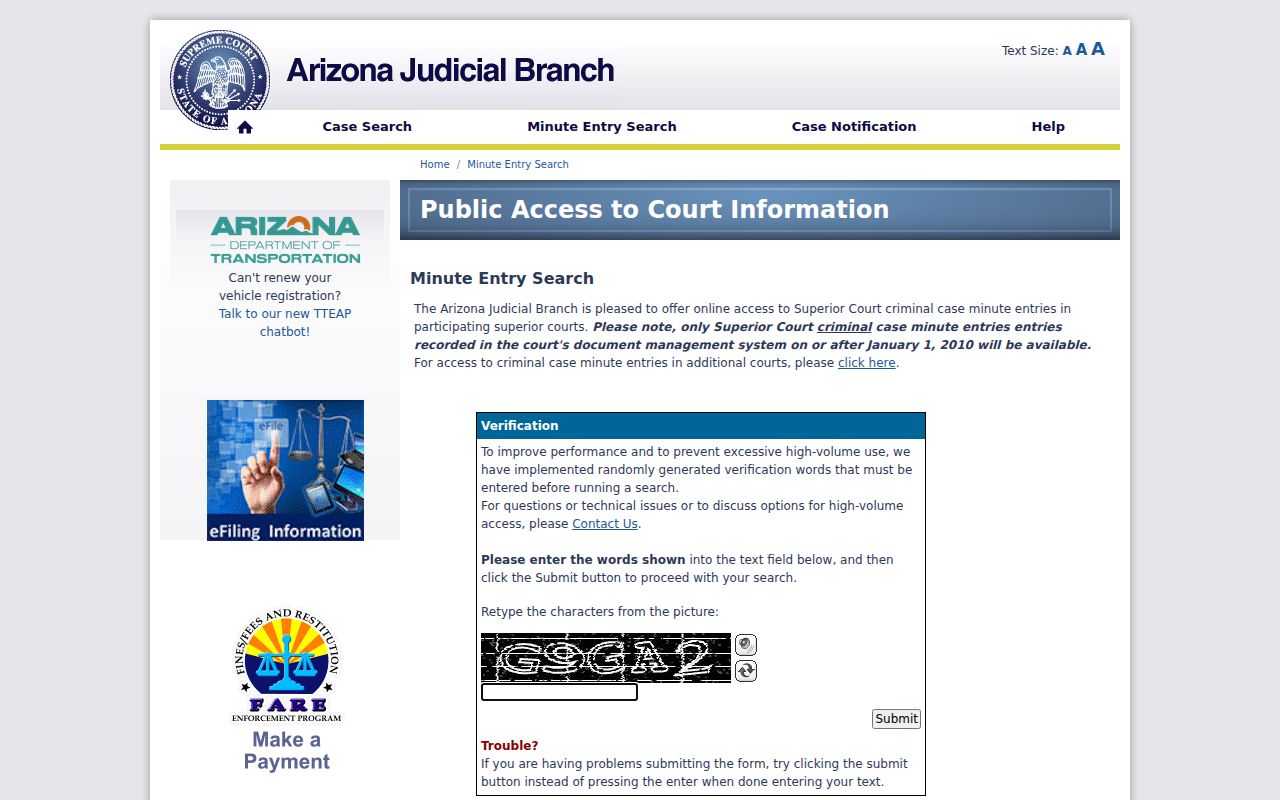
A result, or a missing one, is only a starting point. The Arizona court clerk can confirm whether a file exists, whether it is restricted, and how to request a record the portal does not display. For comparison, the Maricopa Superior Court criminal search lets you query one county by name, initials plus birth date, or case number.
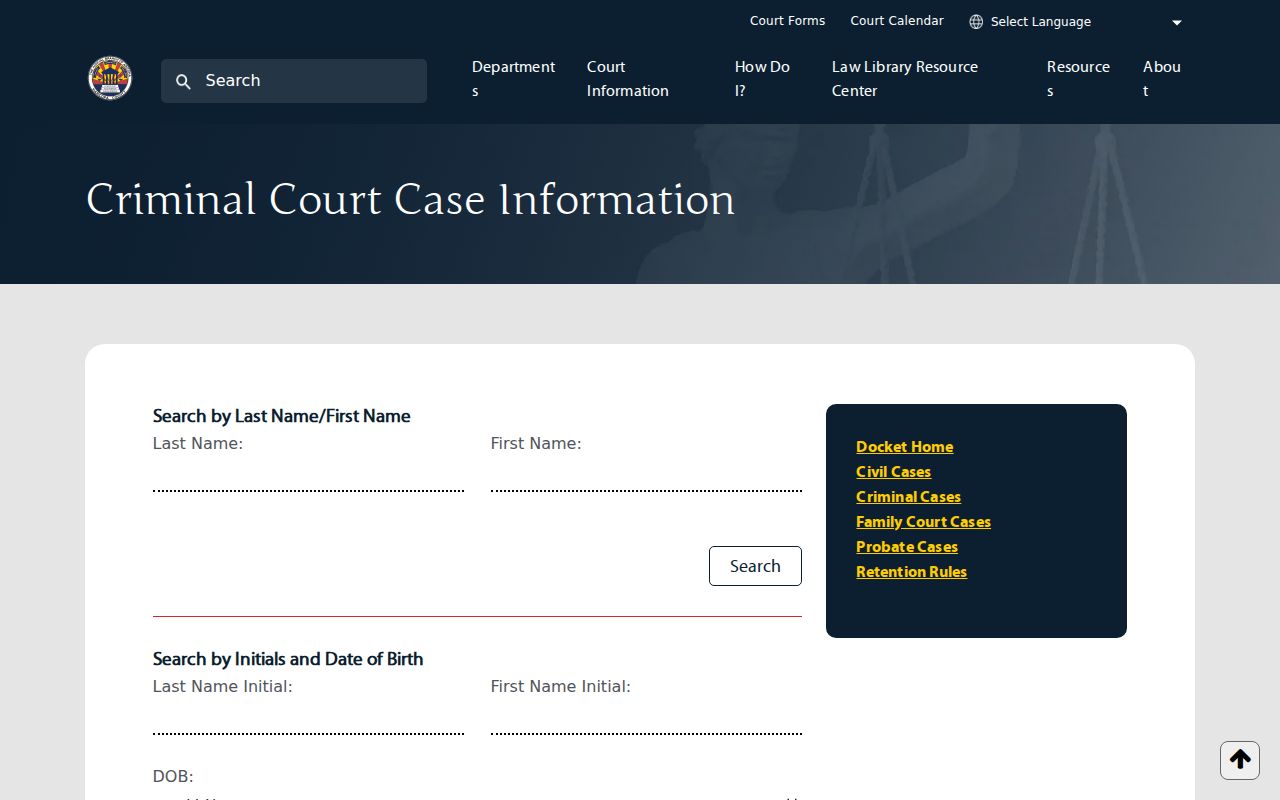
Other Arizona courts use different search controls. The local clerk remains the source for the official file. Note: Public Access refreshes weekly, so a same-week filing or minute entry may not yet appear in Arizona's search results.
What an Arizona Criminal Docket Shows
An Arizona criminal docket is a dated history of a court case. It can show the charge, party names, assigned court, hearing events, and outcome. Arizona case systems may display only part of that history. A docket entry is not always a link to the filed paper it describes. A minute entry is the court's written summary of an event. It is not a verbatim transcript under Arizona Supreme Court Rule 125.
Match the Arizona case number and court location. That confirms the result is the matter in question. Party names can be similar. Some identifying details may be withheld by law or court order. A filed charging document states an allegation; it is not a finding of guilt.
| Case number | The Arizona court-assigned identifier. An eAccess criminal example is CR202301234; formats and punctuation vary by court. |
|---|---|
| Case title and parties | The Arizona case caption and listed participants. Names may be shortened or protected. |
| Charge and statute | The filed Arizona offense description and cited law, when shown. The charging paper supplies the formal allegation. |
| Events and minute entries | Dated Arizona case activity, such as an appearance, motion, order, or disposition. |
| Judicial officer and setting | The Arizona judge or commissioner, plus a hearing date and type when displayed. |
| Document status | Whether a public image of an Arizona filing is available. An event may appear even when the document is restricted or not offered online. |
| Disposition | An Arizona case or charge outcome, such as pending, dismissed, adjudicated, sentenced, appealed, or closed. Local code lists differ. |
Arizona Criminal Case Numbers and Event Labels
Arizona does not use one exact criminal case-number pattern across every court. The eAccess guide gives criminal examples such as CR202301234 and 202301234. Local systems may add prefixes, year markers, or punctuation. A Maricopa Superior Court criminal number can use a pattern like CRYYYY-######. Treat that local shape as local, not statewide.
Event wording also changes from one case-management system to another. Arizona's public materials offer no complete current statewide criminal disposition-code list. When a short event label is unclear, read the newest filed order or minute entry. Then ask the court clerk to explain an unfamiliar local term.
- Initial appearance
- An early Arizona court appearance after arrest or charging, often addressing release and next steps.
- Arraignment
- An Arizona hearing where the defendant is informed of the charges and enters a plea.
- Minute entry
- A written Arizona court record of events and official acts, not a transcript.
- Reset or continued
- A scheduled event moved to a later date or a new calendar slot; earlier entries remain part of the history.
- Disposition
- The outcome or status recorded for the case or charge. The precise Arizona code is local.
The eAccess public search guide documents these number examples and the available advanced-search fields, though it stops short of a statewide local-code glossary. Note: The state publishes no complete disposition-code list; the clerk can explain an unfamiliar local event label.
Stages of an Arizona Criminal Case
An Arizona criminal case can start in more than one place. A felony may pass through Justice Court first, at an initial appearance or preliminary proceeding. It then lands in Superior Court once an indictment or information is filed. The Superior Court case often carries a new number. So an early search may miss the later history. The lower court keeps its own file.
From filing onward, the docket fills in. Entries can cover release conditions, arraignment, pretrial conferences, motions, a plea or trial, and sentence. A plea entry may not spell out every term of the deal. For the court's actual ruling, read the final order. Then scan later entries for an appeal or post-judgment filing.
Arizona criminal docket flow: Charge filed › Initial appearance › Pretrial settings › Plea or trial › Disposition › Sentencing or appeal.
Initial Appearance and Arraignment Are Different Events
These two docket entries often sit close together, but they are not the same event. The initial appearance follows arrest or charging. It can set release terms and the next hearing date. Arraignment is where the defendant hears the charges and enters a plea. The order of events depends on the case path and the court.
Arizona Rule of Criminal Procedure 4.1 governs the timing. A person arrested without a warrant must get an initial appearance within 24 hours. Otherwise the person must be released. If no complaint is filed within 48 hours after that appearance, the rule requires release. It also vacates the preliminary-hearing date. Those are custody deadlines, not portal update schedules. The Judicial Branch's criminal case steps outline the full sequence.
| Entry | What it can show | What to check next |
|---|---|---|
| Initial appearance | First appearance, release decision, and next Arizona court date. | Latest order or release terms. |
| Arraignment | Advisement of the Arizona charge and plea entry. | Next setting and any written plea paperwork. |
| Preliminary hearing | An Arizona probable-cause proceeding when the felony has not followed another authorized charging path. | Whether the case remains in Justice Court or has a separate Superior Court number. |
Where Arizona Criminal Dockets Sit
No single statewide clerk keeps Arizona criminal dockets. The right record keeper is the court named on the case paper. Felonies and many felony post-judgment matters belong to Superior Court. Justice Courts take many misdemeanors, criminal and traffic citations, initial appearances, and preliminary felony proceedings. Municipal Courts handle city ordinance cases plus some misdemeanor and traffic matters. The Judicial Branch's Arizona court-organization chart maps the levels statewide.
Each level keeps its own records. The county Clerk of the Superior Court holds the Superior Court file, while the local Justice or Municipal Court clerk holds the lower-court docket. The Judicial Branch's Superior Court clerk contact list points to county offices. Appeals get a separate appellate case number and record. Start with the County Directory, then follow the court printed on the citation or notice.
| Court level | Common criminal docket | Custodian and search route |
|---|---|---|
| Superior Court | Arizona felonies, sentencing, post-conviction matters, and some appeals from lower courts. | County Clerk of the Superior Court in Arizona; Public Access or eAccess for eligible matters, then the local clerk. |
| Justice Court | Arizona misdemeanors, citations, initial appearances, and preliminary felony proceedings. | Clerk of the specific Arizona precinct court; local portal or counter and Public Access when participating. |
| Municipal Court | Arizona city or town ordinance cases, traffic, and assigned misdemeanor matters. | Clerk of the named Arizona city or town court; check its local search and records process. |
| Appellate courts | Arizona appeals and review of criminal rulings, with a separate docket number. | Arizona appellate clerk and case portal; the trial-court file remains separate. |
Note: An appeal opens its own appellate record. The lower Arizona criminal case stays with the court that heard it.
Arizona Criminal Docket Search and E-Filing Differ
Filing a paper and looking one up are different jobs. Arizona e-filing delivers a submission to a participating court. The clerk reviews it there; an accepted filing is then recorded in the court's case system. A receipt alone proves nothing about acceptance. Public Access handles lookups. EAccess is a separate Superior Court case and document service.
The Judicial Branch's Arizona e-filing availability matrix breaks down coverage by court and case type. It shows why no single criminal filing path can be assumed statewide.
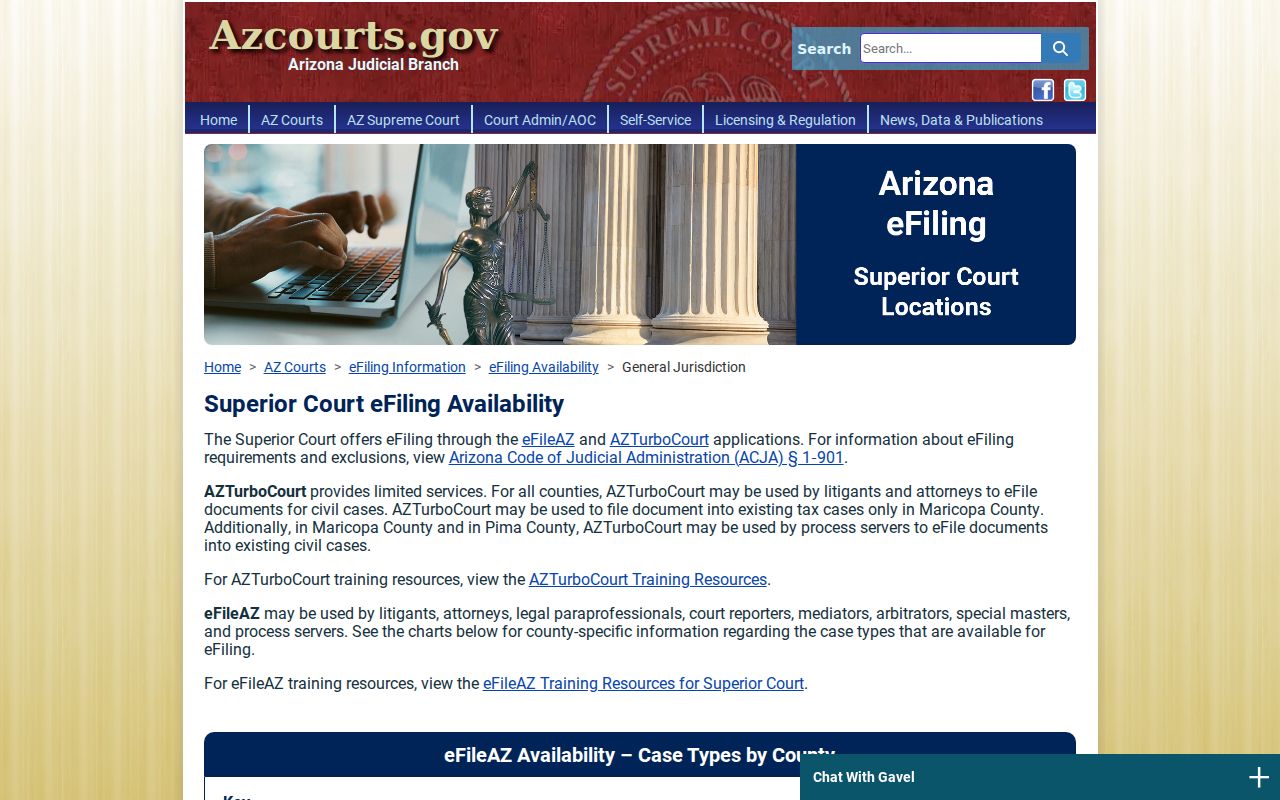
The matrix covers filing availability only. It says nothing about public search coverage. If an accepted Arizona filing is missing from an online case history, ask the clerk who holds the case to confirm docketing and access.
Arizona Treatment Courts and Criminal Sealing
Arizona's Judicial Branch lists many specialty courts. These include drug and recovery, DUI, veterans treatment, mental-health, homeless, community, domestic-violence, and animal-welfare programs. Participating local courts run them. They do not form a separate statewide criminal court level, nor one public statewide docket. The case stays with the court handling the underlying matter. A program may add review settings to the calendar.
Joining a program does not seal the case. A docket can still show ordinary events. Sensitive treatment or clinical material may face separate limits. Before assuming a record is public or closed, check the court's access rules and the current case order. The Arizona specialty-court directory lists program categories and local locations statewide.
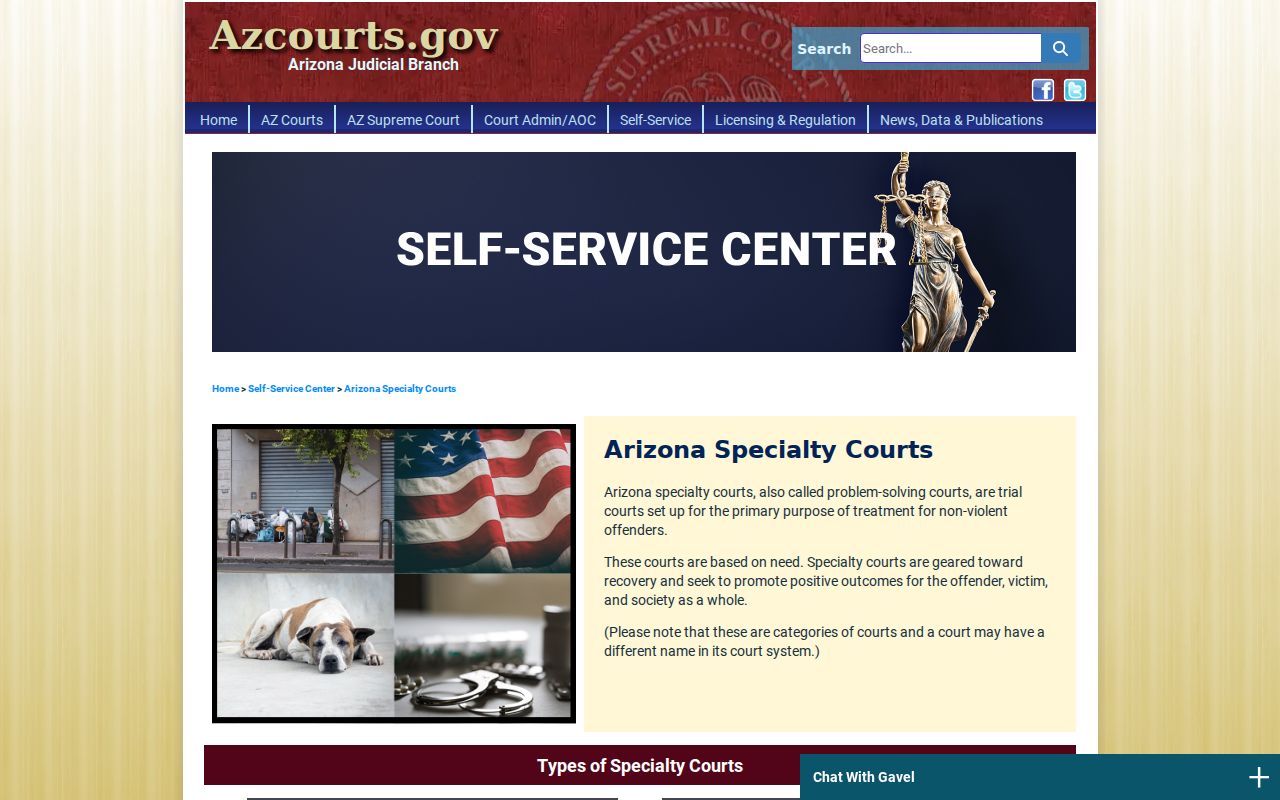
The program list is not a unified docket index. The local Arizona court clerk can tell you which case number and calendar hold the public event history. Note: A specialty-court name does not point to a separate statewide case-number system or docket.
Sealed Criminal Dockets in Arizona
Arizona leans toward openness. Supreme Court Rule 123 presumes court case records are public unless a law, a rule, or a court order closes them. Remote search adds its own limits. The Public Access system leaves out sealed cases and several protected categories. eAccess withholds restricted or confidential images. A missing Arizona result can therefore reflect a coverage or access gap rather than proof that no court record exists.
State law also lets a judge seal an eligible criminal record by order under A.R.S. §13-911. Sealing is not a dismissal. The court file survives too; Arizona does not physically destroy it. Juvenile records carry separate confidentiality protections. A Dec. 2025 amendment to Rule 123 goes further, cutting off remote public access to pre-charge warrant information until the warrant is served, expires, or is quashed. For older or restricted records, ask the clerk of the court that holds the file.
The Arizona rules gateway publishes the current public-access rules. Read that coverage alongside the statutes and the local court's own case access process for any docket you cannot see online.
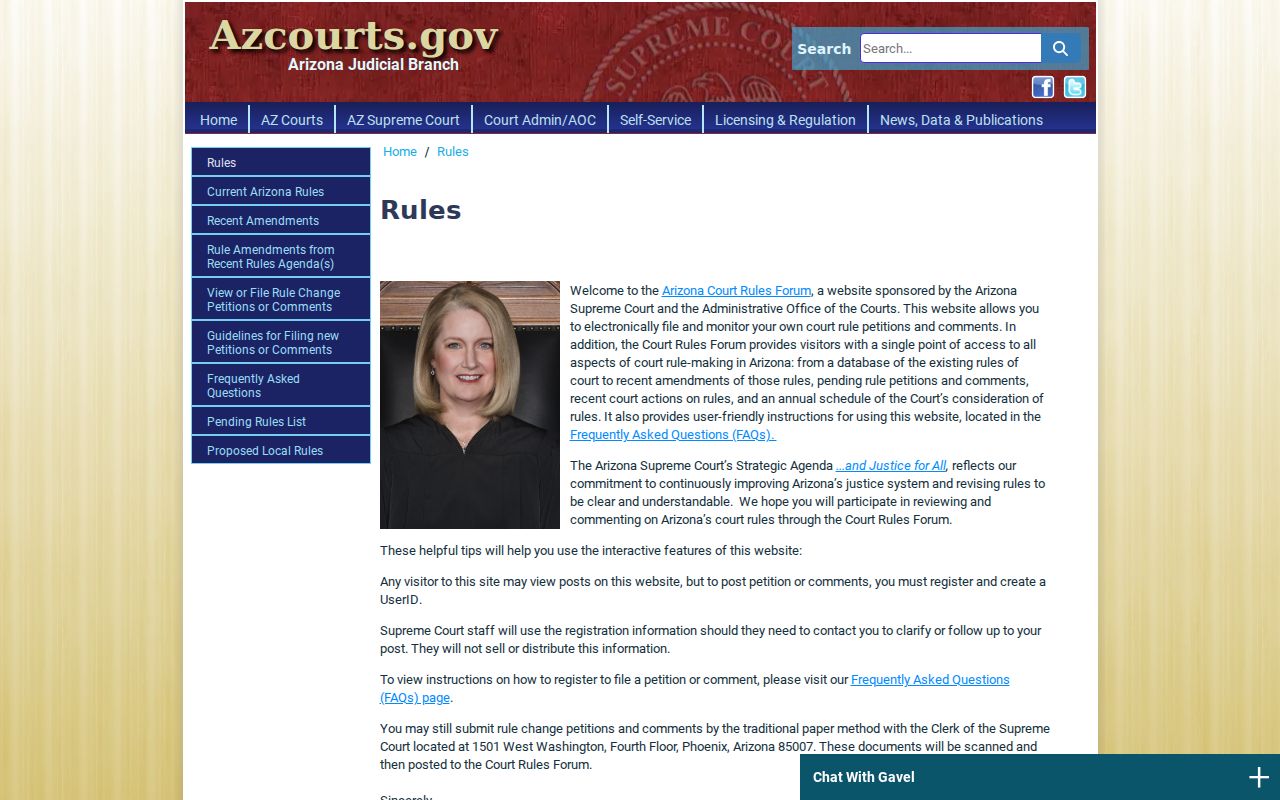
For Arizona local records, use the County Directory to find the clerk for the right court. A statewide docket search cannot certify what a local court file actually contains.
Key Rules:
Arizona Supreme Court Rule 123 governs access to judicial records and permits restrictions required by law, rule, or order.
A.R.S. §13-911 provides a court process for sealing eligible criminal case records.
A.R.S. §8-208 sets confidentiality protections for Arizona juvenile court records.